Are Islamic Mortgages Halal? A Sharia Analysis of UK Home Purchase Plans (2026)
The UK housing market has faced significant volatility in recent years, with interest rate fluctuations from the Bank of England leaving many homeowners struggling with conventional mortgage repayments. For the British Muslim community, the challenge is twofold. Beyond the financial burden, there is the foundational requirement to avoid Riba (interest), which is the cornerstone of conventional property finance. This has led to the rise of Islamic mortgages, technically known as Home Purchase Plans (HPP). However, a persistent question remains among retail investors and prospective homeowners: Are these products genuinely Sharia compliant, or are they simply conventional loans rebranded with Arabic terminology?
The Core Conflict: Debt vs Equity
The fundamental difference between a conventional mortgage and an Islamic Home Purchase Plan lies in the nature of the relationship between the financier and the customer. In a conventional mortgage, the relationship is that of a creditor and a debtor. The bank lends money to the buyer to purchase a property, and the buyer repays the principal plus interest. Under Sharia law, money is not a commodity to be sold at a profit; it is a medium of exchange. Charging for the use of money is Riba, which is strictly prohibited.
In contrast, a Sharia compliant Home Purchase Plan is structured as a trade or a partnership. The bank does not lend you money to buy the house; instead, the bank buys the property (either in full or as a partner) and then enters into a contract with you to eventually transfer ownership. The profit earned by the Islamic bank is derived from rent or a markup on the sale price, both of which are permissible forms of gain in Islamic finance.
Sharia Analysis: Riba, Gharar, and Maysir
To evaluate the permissibility of UK Islamic mortgages, we must apply the AAOIFI (Accounting and Auditing Organisation for Islamic Financial Institutions) standards against the three core prohibitions: Riba, Gharar, and Maysir.
The Prohibition of Riba (Interest)
The Qur'an is explicit in its prohibition of interest. Allah states:
وَأَحَلَّ اللَّهُ الْبَيْعَ وَحَرَّمَ الرِّبَا
"...But Allah has permitted trade and has forbidden interest." (Surah Al-Baqarah 2:275, Saheeh International)
In an Islamic mortgage, the "interest" element is replaced by a profit margin or rent. From a Sharia perspective, this is a critical distinction. While a conventional bank makes money by lending money, an Islamic provider makes money by owning and trading an asset. If you are looking for other ways to ensure your portfolio remains compliant, you should use a halal stock screener to monitor your equity investments.
Avoiding Gharar (Excessive Uncertainty)
Gharar refers to uncertainty in a contract that could lead to dispute. AAOIFI Sharia Standard No. 9 (Ijarah and Ijarah Muntahia Bittamleek) requires that the lease terms, rental amounts, and the eventual transfer of ownership be clearly defined. In the UK, Home Purchase Plans must be transparent about how rent is calculated and how the customer's share of the property increases over time.
Eliminating Maysir (Speculation)
While conventional mortgages can involve speculative elements, such as interest rate swaps or complex derivatives, Islamic mortgages must be grounded in the real economy. The financier must take on the risk associated with property ownership, such as the risk of total loss or structural defects, for at least a portion of the contract duration.
Common Structures in the UK Market
There are three primary structures used by UK providers like Gatehouse Bank, StrideUp, and Wayhome.
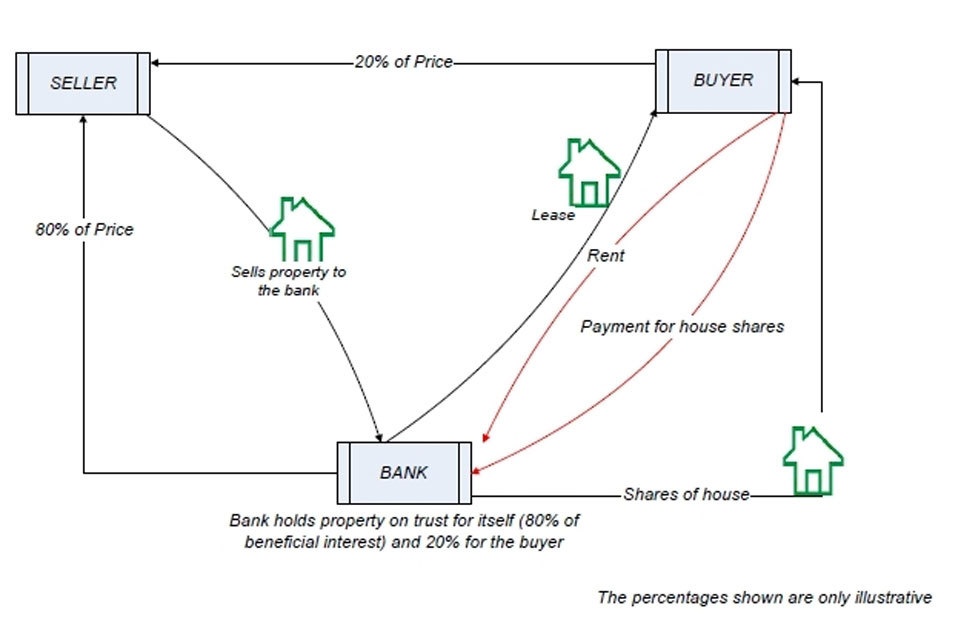
1. Diminishing Musharaka (Co-ownership)
This is the most common structure for residential purchases in the UK. It is based on AAOIFI Sharia Standard No. 12. The bank and the customer buy the property together. The customer lives in the property and pays rent to the bank for the portion they do not yet own. Simultaneously, the customer buys the bank’s shares in installments. As the customer's ownership share increases, the rent decreases.
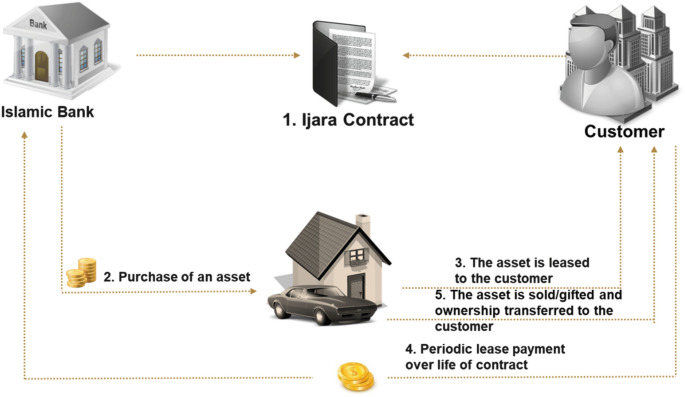
2. Ijara Muntahia Bittamleek (also known as Ijara wa Iqtina) (Lease to Own)
Often used in Buy to Let scenarios, the bank buys the property and leases it to the customer. At the end of the term, the bank transfers the property to the customer as a gift or for a nominal fee. This is governed by AAOIFI Sharia Standard No. 9.
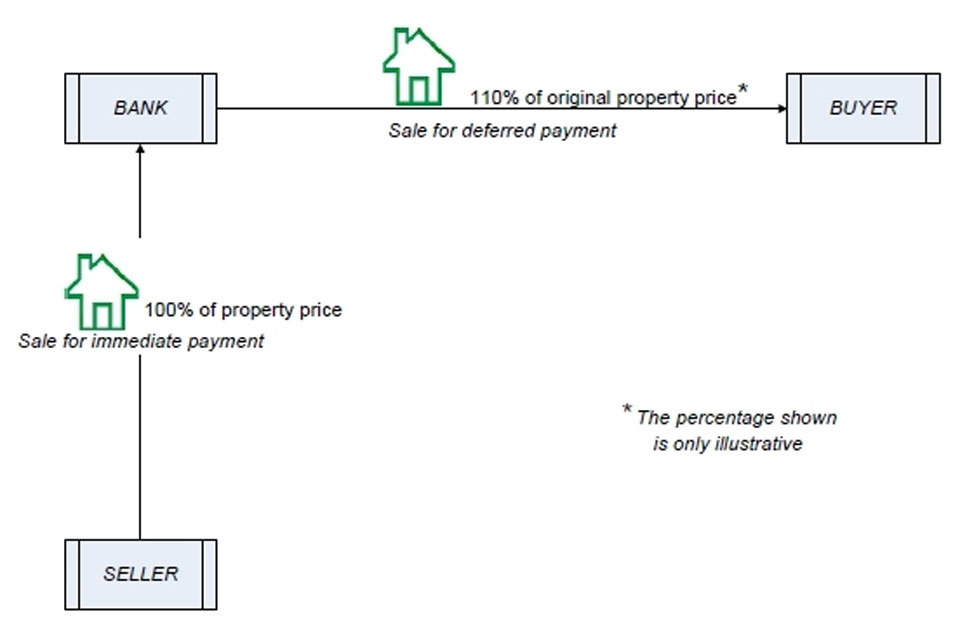
3. Murabaha (Cost-Plus Profit)
The bank buys the property and sells it to the customer at a higher price. The customer pays this fixed price in installments. While common in commercial finance, it is less frequent in UK residential markets due to tax and regulatory complexities. This structure follows AAOIFI Sharia Standard No. 8 (2015). If you are exploring digital assets as well, you might find our analysis of halal crypto useful for diversifying your halal portfolio.
Key Islamic Mortgage Providers in the UK (2026)
For those looking to enter the property market, several providers offer Sharia-compliant products. These range from established banks to innovative fintech platforms.
| Provider | Core Structure | Target Market | Key Feature |
|---|---|---|---|
| Gatehouse Bank | Diminishing Musharaka | Residential & BTL | Fully digital application, high trust score. |
| Al Rayan Bank | Diminishing Musharaka | Commercial & HNW | The UK's oldest and largest Islamic bank. |
| StrideUp | Shared Ownership (HPP) | First-time Buyers | Low deposit requirements (from 5%). |
| Wayhome | Gradual Ownership | Residential | Rent-to-buy model with no debt component. |
| Pfida | Diminishing Musharaka | Residential | No-interest, shared-equity model with a community fund. |
Note: Wayhome is not Sharia-certified; its gradual ownership model avoids debt but has not been reviewed by a Sharia board. Muslims considering it should seek independent scholarly advice.
Where Scholars Differ
The "Islamic mortgage" debate is one of the most active areas of contemporary fiqh, with several points of divergence among recognized authorities.
The Benchmarking Debate (SONIA and Base Rates)
Most UK Islamic banks peg their rental rates to the Bank of England Base Rate or the Sterling Overnight Index Average (SONIA). Critics argue that because the rent moves in tandem with interest rates, the product is functionally identical to a conventional mortgage.
Mufti Taqi Usmani addresses this in An Introduction to Islamic Finance (2002), holding that using an interest rate as a benchmark does not by itself render a valid sale or lease haram, though he describes the practice as undesirable and encourages the industry to develop its own benchmarks. Proponents argue that Islamic banks must remain competitive in the local market, and benchmarks are a practical tool for price discovery. However, some scholars remain cautious, preferring benchmarks tied to local rental yields, though this is rarely practical in the current UK financial infrastructure.
Responsibility for Maintenance (FRI Leases)
A significant point of contention involves "Full Repairing and Insuring" (FRI) leases. Under classical Ijarah rules (AAOIFI Standard No. 9), the owner (the bank) should be responsible for structural maintenance, while the tenant (the customer) handles routine upkeep. In the UK, almost all Islamic mortgages shift the entire maintenance burden to the customer.
While this deviates from the preferred classical model, UK Sharia boards have generally accepted this arrangement on the basis of the customer's occupier status and the regulatory requirements that treat HPPs similarly to conventional home ownership. The argument is that the customer behaves like an owner from day one and thus assumes the responsibilities of one.
Practical Implications for Muslim Investors
For British Muslims, choosing an Islamic mortgage often comes at a premium. Because Islamic banks cannot access the same cheap liquidity as conventional banks (who can borrow on interest from the central bank), the "rent" on a Home Purchase Plan is often higher than the interest on a conventional mortgage.
Furthermore, the market has seen some contraction. Major players like Al Rayan Bank have periodically withdrawn from the residential market, while others like HSBC Amanah have closed entirely. New entrants like StrideUp and Pfida are attempting to fill the gap with innovative shared ownership models, but they often operate with waitlists or higher deposit requirements.
Prospective buyers should also be aware that HPPs are regulated by the Financial Conduct Authority (FCA). HPPs from FCA-regulated providers carry conduct-of-business protections, and savings accounts held with UK Islamic banks are covered by the FSCS up to £85,000 per person, per institution. The FSCS does not, however, protect the deposit you contribute towards the property itself, and non-bank providers do not offer FSCS deposit cover. For more on the foundational principles of these institutions, see our guide on Islamic banking.
Conclusion
Islamic mortgages in the UK are not merely conventional loans with a different name. They represent a fundamental shift in contractual structure, from a debt-based model to an asset-based model. While the use of interest rate benchmarks and the distribution of maintenance costs remain areas of scholarly discussion, the core mechanics of Diminishing Musharaka and Ijarah are structurally distinct from an interest-bearing loan. Whether individual UK products live up to that structure in practice remains a matter of scholarly scrutiny, and buyers should review each provider's Sharia certification. For the Muslim investor, these products offer a vital path to home ownership that aligns with ethical and religious obligations, provided one is willing to navigate the unique costs and complexities of the Sharia compliant market.
This article is educational analysis, not a fatwa, financial advice, or an endorsement of any provider. Review each provider's own Sharia board certification and consult a qualified scholar before committing.
FAQ
1. Is the total cost of an Islamic mortgage higher than a conventional one?
Generally, yes. Islamic banks have higher funding costs because they cannot borrow money on interest from other banks or the central bank. These costs are passed on to the customer through higher rental rates.
2. Can I switch from a conventional mortgage to an Islamic one?
Yes, this is treated as a refinancing. The Islamic bank will "buy" the property from you (paying off your conventional mortgage) and then enter into a Home Purchase Plan with you.
3. What happens if I miss a payment?
Islamic banks cannot charge interest on late payments. However, they may charge a fixed administration fee to cover costs, or require a mandatory donation to charity to discourage late payments, as permitted under AAOIFI standards.
4. Are Islamic mortgages only for Muslims?
No. Anyone can apply for a Home Purchase Plan. Some non-Muslims choose them for ethical reasons or because the shared-ownership model suits their financial situation.
5. Is my deposit protected?
UK Islamic banks are regulated by the FCA and PRA, and savings accounts held with them are covered by the FSCS up to £85,000 per person, per institution. The FSCS does not, however, protect the deposit you contribute towards the property itself, and non-bank providers do not offer FSCS deposit cover.
6. Why is rent pegged to the Bank of England base rate?
It is used as a benchmark to ensure the bank's pricing is competitive and reflects the current economic environment. Scholars allow this as long as the underlying contract is not a loan.
7. Do I own the house from the beginning?
In a Diminishing Musharaka, you and the bank own it jointly. Your share increases as you make payments. You have the right to live in the property as a tenant of the bank's share.
Sources
- Springer: Fig. 10.10 Ijarah Muntahia bi al-Tamlik (Lease to Own) Diagram
- UK Government: Practice Guide 69 - Islamic Financing
- AAOIFI Sharia Standards, 2015 Edition, Standard No. 8, 9, and 12.
- Usmani, M. T. (2002). An Introduction to Islamic Finance. Read on Academia.edu.
- Adam, M. F. (2020). Amanah Advisors: Research on Home Purchase Plans in the UK.
- Joe Bradford: Sharia Advisor & Islamic Finance Expert.
- Financial Conduct Authority (FCA): Regulation of Home Purchase Plans.
- Gatehouse Bank: Shariah Principles of Home Purchase Plans.
- Al Rayan Bank: Sharia Compliance.
- StrideUp: How it Works.
- Wayhome: Help Center.
- Pfida: Shariah-Compliant Property Finance.
- Halal vs Haram in Islamic Finance
- The Concept of Money Purification
- Islamic Banking: A Comprehensive Guide
- Is DeFi Halal?
- The Ultimate Halal Crypto List