Is Bitcoin Halal? A Sharia Analysis for Muslim Investors (2026)
Author: Zaid Alissa, CTO and Halal Finance Researcher | Published: May 2026 | Updated: May 2026
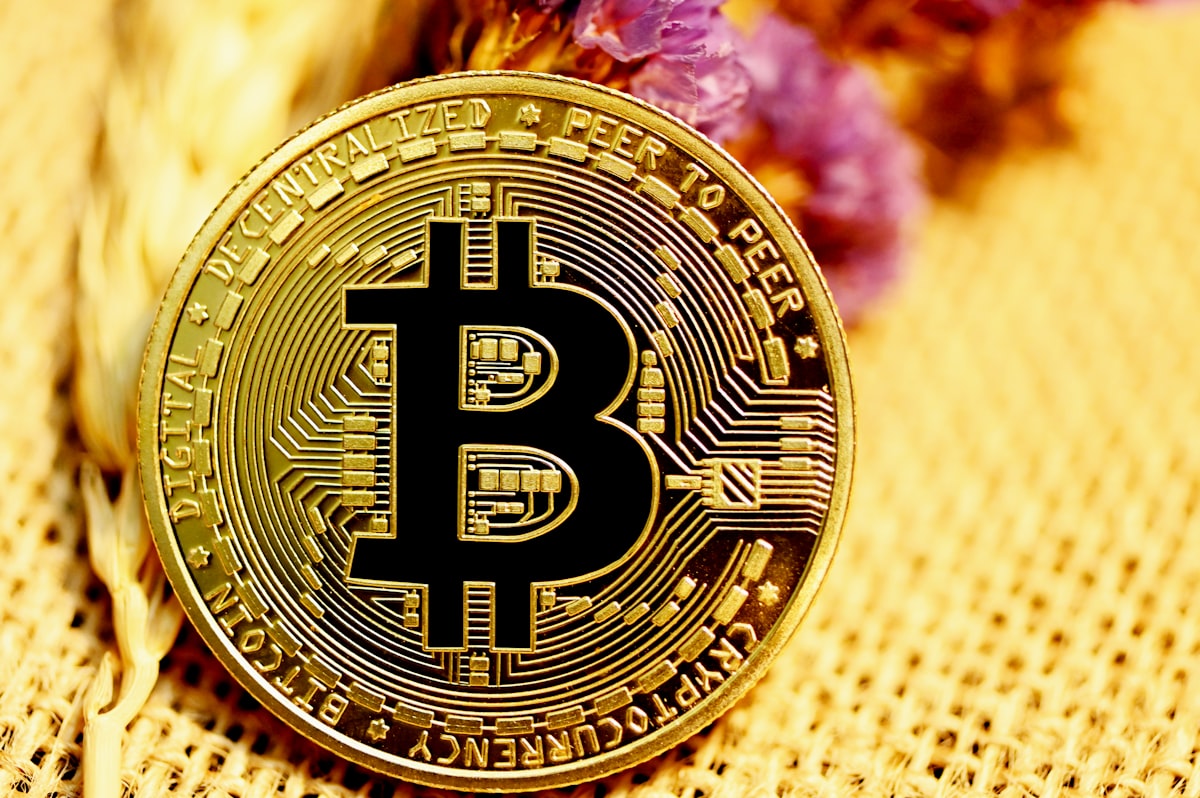
The question has followed Islamic finance discourse for over a decade. Is Bitcoin halal? And I will be direct from the start: the answer is not a single word, and anyone who gives you one without qualification has either not read the literature carefully or is simplifying for an audience that deserves better.
What I can give you is the most honest, grounded position currently available in 2026. I have reviewed this question with scholars, worked through the primary fatawa, and watched the regulatory environment develop across Muslim-majority countries. The analysis below reflects that body of work, including the genuine areas of scholarly disagreement that still exist.
What Bitcoin Actually Is
Before any Sharia ruling can be properly applied, the subject must be understood accurately. Bitcoin is a decentralised digital currency that operates on a public distributed ledger called a blockchain. No central bank issues it. No government backs it. Its supply is algorithmically capped at 21 million coins, of which approximately 19.7 million are already in circulation.
Bitcoin functions in practice as both a medium of exchange and a store of value. El Salvador adopted it as legal tender in 2021, though it scaled back mandatory acceptance in 2025 under its IMF programme. Across the UAE, Malaysia, and other Muslim-majority jurisdictions it is now a regulated asset class under formal legislative frameworks. Hundreds of thousands of merchants globally accept it as payment. Institutional investors, including sovereign wealth funds and major banks, hold it as a portfolio component.
These facts are directly relevant to the Sharia analysis. The question of whether Bitcoin possesses "maaliyya", the quality of being wealth or property that rational people recognise and treat as valuable, cannot be answered in the abstract. It depends on how rational people in the contemporary world actually treat it. At this point in history, a strong case exists that it does, and most scholars who permit Bitcoin rest their ruling here; scholars who prohibit it dispute precisely this point.
The Property Question: Does Bitcoin Have Legal Standing in Fiqh?
Classical fiqh identifies two conditions for something to qualify as "mal" (property with legal standing). First, it must be something that people desire and pursue. Second, it must be something that can be stored and utilised. Bitcoin satisfies both conditions in the contemporary context.
The concept of "urf" (custom and prevalent practice) plays a significant role in this determination. Islamic commercial law has historically accommodated new forms of exchange that gain widespread societal acceptance as stores of value. Paper currency, for example, has no intrinsic value and no physical backing, yet it achieved full Sharia recognition through a combination of utility and broad social acceptance codified in law. Bitcoin has followed a comparable trajectory, albeit in a compressed timeframe.
The general Quranic principle is that trade and exchange are permissible, with specific prohibitions requiring explicit evidence. Allah says in Surah Al-Baqarah, verse 275:
وَأَحَلَّ اللَّهُ الْبَيْعَ وَحَرَّمَ الرِّبَا
"But Allah has permitted trade and has forbidden interest." (Saheeh International, quoted in part; "interest" here translates riba)
The default position in Islamic commercial law is permissibility. Prohibitions require specific evidentiary basis. This is not a technicality; it is a foundational principle of fiqh al-muamalat that shapes how every novel financial instrument is approached.
The Riba Question
The analysis here is the clearest of the three. Buying Bitcoin on a spot basis, holding it, and selling it involves no riba whatsoever. There is no predetermined interest charge. There is no loan relationship. You own an asset, its value changes according to market forces, and you transact on the open market. The structure is identical to buying gold or foreign currency.
The riba concern enters only through specific instruments built on top of Bitcoin, not through Bitcoin itself. Leveraged Bitcoin trading on derivatives exchanges involves borrowed capital. Perpetual futures contracts include funding fees that function as periodic interest payments between counterparties. Bitcoin-backed lending protocols charge predetermined rates on loans. In each of these cases, the prohibition attaches to the instrument, not the underlying asset.
This is the same logical structure that applies to gold. Gold itself is permissible. A gold-backed loan charging compound interest is not. The permissibility of the underlying asset does not determine the permissibility of every product that references it.
The Gharar Question
Gharar refers to excessive contractual uncertainty, not to market price risk. This distinction is essential and frequently misunderstood in popular discussions about Bitcoin and Sharia.
Bitcoin's price is volatile. It has declined by 80 percent or more in multiple market cycles and recovered to new highs in each subsequent cycle. That volatility is a characteristic of the market, not a form of gharar. When you buy Bitcoin, you know precisely what you are buying, at what price, and under what terms. The contract is unambiguous. The asset is identifiable. The consideration is defined at the moment of transaction.
Gharar would arise if the fundamental terms of the transaction were themselves unknown or unknowable. A contract to buy an unspecified digital asset at a price to be determined at an unknown future date would involve gharar. A standard spot purchase of Bitcoin at a defined market price does not.
Allah commands clarity and documentation in transactions. In Surah Al-Baqarah, verse 282:
يَا أَيُّهَا الَّذِينَ آمَنُوا إِذَا تَدَايَنتُم بِدَيْنٍ إِلَىٰ أَجَلٍ مُّسَمًّى فَاكْتُبُوهُ
"O you who have believed, when you contract a debt for a specified term, write it down."
The underlying principle is that transactions should be documented and clear to both parties. Bitcoin's blockchain is arguably the most transparent transaction ledger ever created. Every transfer is public, permanent, and cryptographically verifiable. It satisfies the Islamic requirement for transactional clarity to a degree that many traditional financial instruments do not.
The Maysir Question
The gambling prohibition is the most context-dependent of the three analyses, and the one where a Muslim investor's personal conduct matters most.
Buying Bitcoin with a genuine investment thesis, after analysis, with a long-term view, is not gambling. It is a calculated assumption of market risk in pursuit of legitimate financial return. Placing a leveraged position overnight based on a social media post, with no analysis and no considered strategy, approaches the territory of maysir.
The distinction Islamic law draws is not based on the level of price volatility. It is based on intent and the presence or absence of genuine economic purpose. A merchant who buys goods in one city and sells them in another accepts significant price risk. That risk is a legitimate feature of trade. The gambler accepts risk purely for the chance of gain with no productive activity underlying the transaction.
Allah prohibits maysir in Surah Al-Maidah, verse 90:
يَا أَيُّهَا الَّذِينَ آمَنُوا إِنَّمَا الْخَمْرُ وَالْمَيْسِرُ وَالْأَنصَابُ وَالْأَزْلَامُ رِجْسٌ مِّنْ عَمَلِ الشَّيْطَانِ فَاجْتَنِبُوهُ
"O you who have believed, indeed, intoxicants, gambling, [sacrificing on] stone alters [to other than Allah], and divining arrows are but defilement from the work of Satan, so avoid it..."
The word "maysir" in this verse refers to transactions whose outcome depends purely on chance with no underlying productive activity. Holding Bitcoin as a long-term store of value does not fall within this prohibition. Short-term speculation in Bitcoin with no analysis, no genuine investment thesis, and no consideration of fundamentals moves closer to it. The line is not always mathematically precise, and scholars have acknowledged this openly. But the principle is clear: intent and purpose carry legal weight in Islamic commercial law.
Where Scholars Differ
There is no single unified scholarly position on Bitcoin, and intellectual honesty requires stating this plainly.
The most influential early scholarly analysis permitting Bitcoin was an influential 2017 Sharia analysis commissioned by Blossom Finance. It argued that Bitcoin satisfies the requirements for mal under contemporary fiqh, is free of riba in spot form, and does not constitute gambling when held as an investment. This analysis has been widely cited and has held up well to subsequent scrutiny.
The Diyanet of Turkey initially raised objections on the basis that Bitcoin lacked state backing and was susceptible to speculative manipulation. The Diyanet's 2017 statement ruled that trading cryptocurrencies was not appropriate at that time, citing speculation, excessive uncertainty, and openness to abuse. This is a fiqh-based objection, and no formal retraction has been published.
Egypt's Dar al-Ifta issued a fatwa in 2018 declaring Bitcoin trading impermissible, citing gharar, harm, and its use in illicit transactions. This remains a significant dissenting position.
AAOIFI has not issued a Shari'ah Standard on Bitcoin or digital assets. Scholars instead reason from its general standards, for example Shari'ah Standard No. 1 on trading in currencies and Shari'ah Standard No. 21 on financial paper (Shari'ah Standards, 2015 edition), and from the classical criteria for mal.
Regulatory practice in Muslim-majority countries increasingly reflects a permissible position. Malaysia's Securities Commission has licensed Bitcoin as a regulated asset. The UAE's Virtual Assets Regulatory Authority has developed a comprehensive framework treating Bitcoin as a legitimate investment class. Saudi Arabia remains more restrictive: its regulators have issued repeated warnings about cryptocurrency trading and have not licensed Bitcoin products, a reminder that regulatory acceptance across Muslim-majority jurisdictions is uneven.
The most accurate summary of the contemporary scholarly landscape is this: many qualified contemporary scholars, particularly those advising the Islamic fintech sector, consider spot Bitcoin permissible, while several major national fatwa bodies and senior muftis maintain that it is impermissible or discouraged. The disagreement is live and a Muslim investor should weigh both positions. The permissibility of derivatives products referencing Bitcoin is considerably more contested and depends on the specific structure of each product.
Practical Guidance for Muslim Investors
If you are considering Bitcoin as part of a long-term portfolio, the most defensible contemporary Islamic position is that spot purchases are permissible. You are acquiring a real asset, at a defined price, with clear ownership that you exercise on-chain. No riba is involved, no contractual gharar exists, and if your intent is genuine investment rather than pure speculation, no maysir concern applies.
Four conditions place the holding on its strongest Sharia footing.
First, buy on a genuine spot basis, meaning you actually own the Bitcoin rather than a contract that tracks its price. If you are using a CFD or derivatives product, the permissibility question shifts from Bitcoin itself to the structure of the instrument, which is a separate and more difficult analysis.
Second, avoid leverage entirely. Borrowed capital at interest is riba regardless of what the underlying asset is. Bitcoin purchased with borrowed money is structurally no different from any other leveraged position.
Third, if you are using a derivatives or futures product at any point, verify that no overnight funding fees or interest-equivalent charges apply. For pure spot holdings, this is not relevant. For any form of margin or perpetual position, it matters directly.
Fourth, maintain a genuine investment thesis. Know why you hold Bitcoin, what role it plays in your financial plan, and at what point your rationale for holding it would change. This is sound investment practice and it also keeps your activity clearly within the bounds of legitimate economic purpose rather than speculative gambling.
You can check the current Sharia screening for Bitcoin and the top 100 cryptocurrencies by market cap using the halal crypto screener at HalalFinanx. Each coin is assessed against the core prohibitions with sourced scholarly reasoning. For equities, the halal stock screener at HalalFinanx applies the same approach to listed companies.
What Remains Genuinely Uncertain
Three questions in the Bitcoin Sharia analysis are not settled and should be acknowledged as such.
The first is the maysir threshold question. Where precisely does speculative intent cross the line into gambling? Scholars I respect hold different positions on this, and the answer is not found in any classical text because the asset class did not exist. Anyone claiming certainty here is overstating the consensus.
The second is the question of Bitcoin mining and its associated rewards. Mining is a form of economic activity involving real costs and producing a real output. However, the interaction between proof-of-work computation, the environmental costs involved, and the fiqhi category that best describes the resulting income has not been fully worked through in the scholarly literature. It is closer to permissible than impermissible in my assessment, but it is a live question.
The third is what happens to Bitcoin's Sharia status if a Muslim-majority jurisdiction formally prohibits it. Islamic commercial law gives legal weight to what is recognised and accepted in a given society. If a government removes that recognition, some scholars argue the urf-based permissibility collapses. This is a theoretical concern at present given the direction of regulation globally, but it is worth noting as a dependency in the analysis.
Conclusion
Bitcoin purchased on a spot basis, held with genuine investment intent, is considered permissible under Islamic commercial law by many qualified contemporary scholars, while several major national fatwa bodies maintain that it is impermissible or discouraged. The three core prohibitions are not triggered by simple ownership of Bitcoin as an asset. The impermissibility concerns arise at the instrument level, in leveraged products, derivatives, and lending arrangements, not at the level of Bitcoin itself.
That distinction is the most important thing a Muslim investor needs to understand. The question is never simply "is Bitcoin halal." The question is always "is this specific Bitcoin-related activity, structured in this specific way, consistent with Islamic commercial law?" The answer to that more precise question is almost always determinable, and for straightforward spot investment, the answer is yes.
Frequently Asked Questions
Is Bitcoin halal in Islam?
Many qualified contemporary scholars consider spot ownership of Bitcoin to be permissible, while several major national fatwa bodies maintain that it is impermissible or discouraged. It satisfies the requirements for mal in fiqh, contains no riba mechanism in the base asset, and does not constitute gambling when held with a genuine investment thesis.
Is Bitcoin mining halal?
Bitcoin mining involves real economic activity (computation and energy expenditure) and produces a real output. Most contemporary scholars view it as closer to permissible than impermissible, though the question has not been formally adjudicated and is treated as a live area of analysis.
Are Bitcoin futures or perpetual contracts halal?
Most scholars treat leveraged Bitcoin futures and perpetual contracts as impermissible. They involve interest-equivalent funding fees, no genuine ownership of the underlying asset, and combine gharar with maysir.
Is it halal to hold Bitcoin in a regular exchange account?
For spot holdings, yes. There are no overnight funding fees on spot positions, so no Islamic account is required for plain spot ownership of Bitcoin.
Should I pay Zakat on Bitcoin?
The majority position is yes. Bitcoin held as an investment or store of value is generally treated as zakatable wealth at 2.5 percent of market value, subject to nisab and haul.
Is leveraged Bitcoin trading halal?
No. Leveraged trading involves borrowed capital at cost, which is riba, regardless of the underlying asset.
This article is general education, not a fatwa or financial advice. Consult a qualified scholar for your circumstances.
Sources
- Quran, Surah Al-Baqarah, verse 275
- Quran, Surah Al-Baqarah, verse 282
- Quran, Surah Al-Maidah, verse 90
- Blossom Finance, Shariah Analysis of Bitcoin, Cryptocurrency and Blockchain (2017)
- AAOIFI Shari'ah Standards (digital assets)
- Amanie Advisors
- Securities Commission Malaysia, Digital Assets Guidelines
- UAE Virtual Assets Regulatory Authority (VARA)
- Diyanet İşleri Başkanlığı (Turkey)
- Dar al-Ifta al-Misriyyah (Egypt)